
If you’re looking for an electric utility vehicle to carry tools, move materials, tow equipment or transport people around your site, you’ll quickly discover there isn’t a one-size-fits-all solution.
While many businesses start by searching for an electric utility vehicle, the right choice could just as easily be a platform truck, pedestrian tug, burden carrier or multi-passenger vehicle. Each is designed for a different job, and choosing the right one can improve productivity, reduce manual handling and make day-to-day operations much more efficient.
This guide explains the main types of electric work vehicles, when each is the right choice and the different configurations available, helping you find the best solution for your business.
Start With the Job, Not the Vehicle
Before comparing makes and models, think about what you actually need the vehicle to do.
Are you carrying equipment across a large site? Towing heavy trailers around a warehouse? Transporting maintenance teams between buildings? Or moving loose materials around a construction site?
Answering these questions first will quickly narrow down the options and help you choose a vehicle that’s designed for the way you’ll use it every day.
When Is an Electric Utility Vehicle the Right Choice?
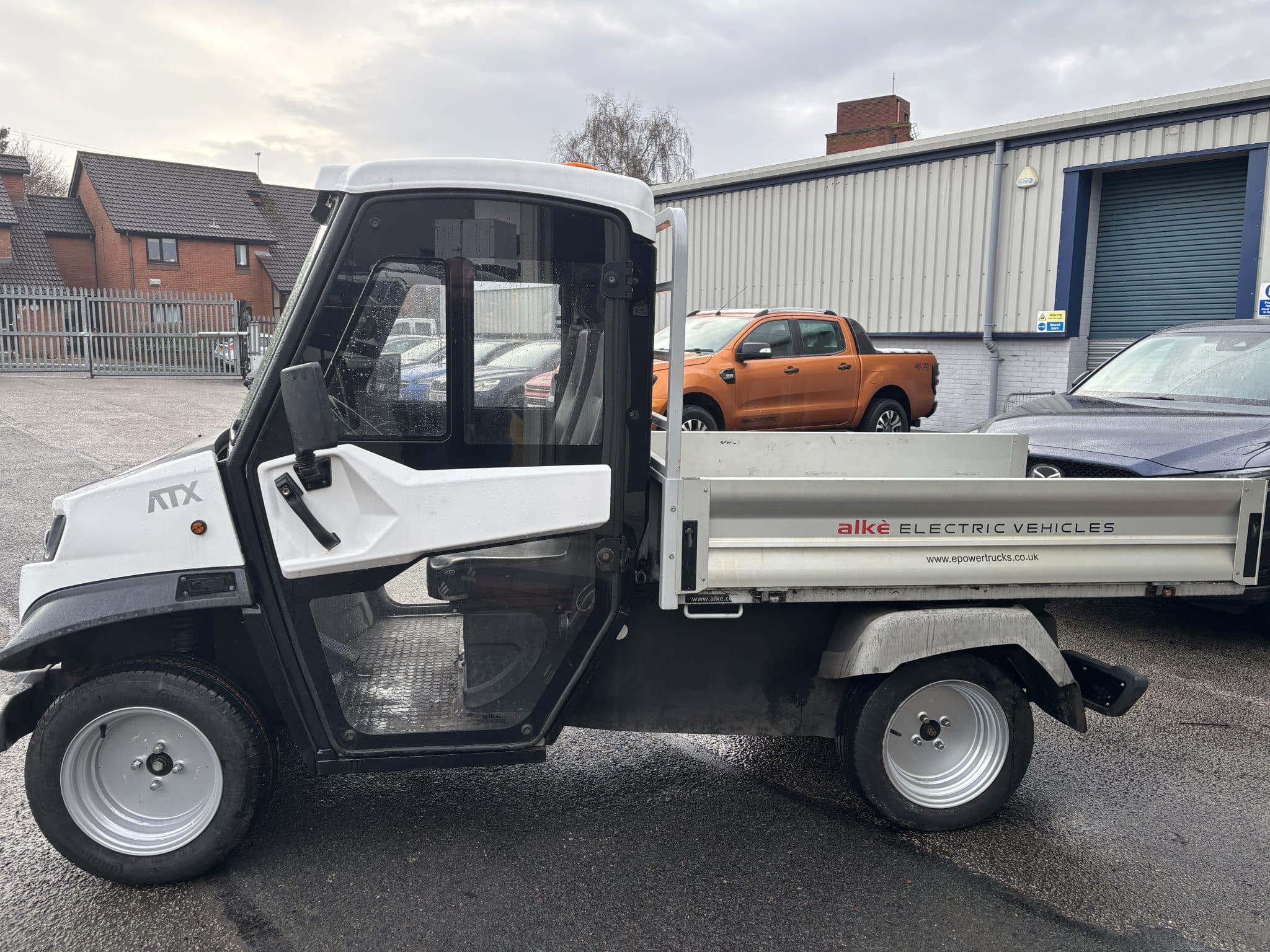
An electric utility vehicle (EUV) is the most versatile option when you need to transport people, tools or materials over longer distances. They’re commonly used across farms, factories, business parks, airports, holiday parks, universities and industrial estates where operators regularly move between different parts of a site.
Unlike smaller material handling equipment, electric utility vehicles allow the driver to travel comfortably while carrying a useful payload, making them ideal for maintenance teams, grounds staff, facilities managers and site engineers.
One of the biggest advantages is flexibility. Depending on the application, an electric utility vehicle can be supplied with a range of body styles, including:
- Flatbeds for transporting equipment and materials.
- Tipper bodies for moving soil, gravel, green waste and loose materials.
- Cage bodies for waste collection and recycling.
- Enclosed rear bodies to protect valuable tools and equipment.
- Double-cab models where additional passengers need transporting alongside equipment.
Many models are also available as road-legal or off-road vehicles, allowing businesses to choose a specification that suits both the terrain and the distances they need to cover.
If your team spends much of the day travelling around a site while carrying different types of equipment, an electric utility vehicle is often the most practical place to start.
When Should You Choose a Platform Truck?
If the main priority is carrying materials rather than transporting people, a platform truck can often be the better solution.
Instead of sitting inside the vehicle, the operator walks behind or alongside it while the load is carried securely on a flat platform. This makes platform trucks particularly useful in warehouses, hospitals, factories, distribution centres and other environments where space is limited and journeys are relatively short.
They’re commonly used for moving:
- Stock and deliveries
- Maintenance equipment
- Waste and recycling
- Laundry
- Manufacturing components
- Catering supplies
Platform trucks can also be configured to suit different jobs. Open decks provide maximum flexibility, while cage sides, enclosed boxes and specialist waste bodies help secure different types of loads.
If your operation involves regularly moving equipment around one site without the need for a ride-on vehicle, a platform truck is often a simpler and more cost-effective choice than a traditional utility vehicle.

When Does a Powered Wheelbarrow Make More Sense?
Sometimes even a platform truck is too large.
Landscaping projects, construction sites and agricultural work often involve uneven ground, narrow access routes and loose materials that need moving little and often throughout the day.
That’s where powered wheelbarrows come into their own.
Rather than replacing larger utility vehicles, they fill the gap between manual wheelbarrows and full-sized work vehicles, reducing the physical effort needed to transport loose materials like soil, gravel, sand, logs, plants and building materials.
Many models include powered tipping bodies, making unloading quicker while reducing manual lifting.
If you’re working in confined outdoor spaces where manoeuvrability matters just as much as carrying capacity, a powered wheelbarrow is usually the more practical option.

When Should You Choose a Pedestrian Tug?
Not every load needs carrying.
In many workplaces, the load is already sitting on wheels. Roll cages, trailers, hospital beds, production carts and waste bins all need moving, but manually pushing them over long distances can be physically demanding.
Rather than lifting the load onto another vehicle, a pedestrian electric tug connects directly to it and does the pulling for you.
These compact machines are widely used in warehouses, hospitals, manufacturing facilities, airports and logistics operations where heavy wheeled loads are moved throughout the day.
Because different businesses use different equipment, pedestrian tugs can be supplied with a variety of hitch and coupling systems to suit the trailers, cages or carts already being used on site.
If the load already has wheels, a pedestrian tug is often a more efficient solution than investing in a vehicle designed to carry it.

When Is a Ride-On Tow Tractor the Better Choice?
If your team is towing heavy loads over longer distances, a ride-on tow tractor can be a better investment than a pedestrian tug.
The principle is the same – the vehicle pulls a trailer, trolley or other wheeled equipment rather than carrying the load itself – but the operator drives the vehicle instead of walking alongside it. This makes it much better suited to larger sites where equipment is moved continuously throughout the day.
Ride-on tow tractors are commonly found in manufacturing plants, airports, distribution centres and other industrial environments where efficiency is key. They can also tow significantly heavier loads than many pedestrian tugs, making them ideal for repetitive, high-volume operations.
When Do You Need a Burden Carrier?
Some businesses need to do more than just carry or tow.
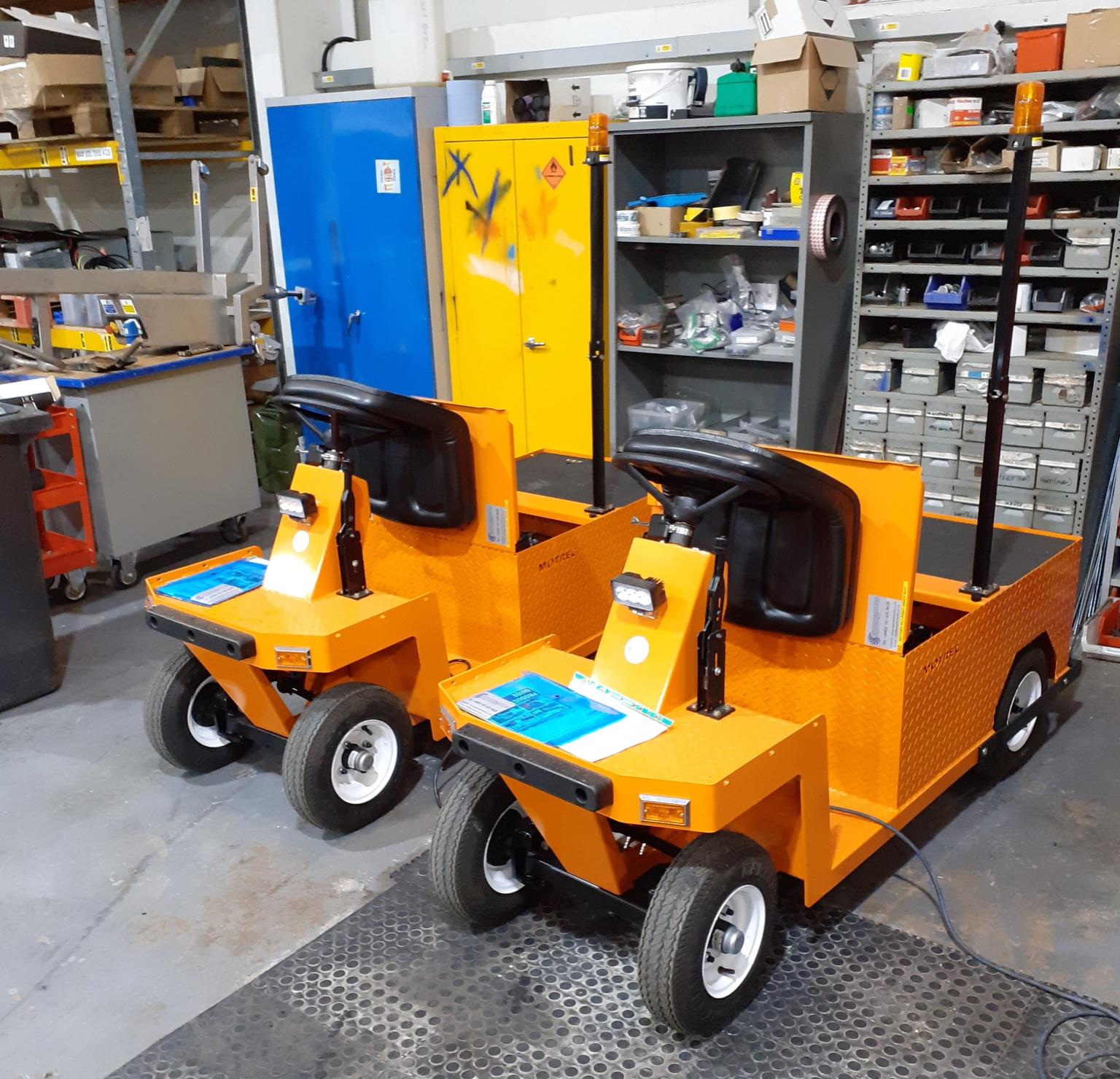
A burden carrier combines the best of both worlds, allowing operators to transport equipment on the vehicle while also towing additional trailers where required. This makes them incredibly versatile across large industrial sites where the work changes from one task to the next.
For example, a maintenance team may need to carry tools, spare parts and testing equipment while towing a trailer containing larger materials. Instead of using multiple vehicles, a burden carrier can often handle everything in one journey.
Available in a range of sizes and payload capacities, burden carriers are popular across manufacturing, aviation, warehousing, rail, defence and large private estates where flexibility is just as important as outright carrying capacity.

What’s the Best Electric Vehicle for Transporting People?
If your priority is moving people rather than equipment, a dedicated multi-passenger vehicle is usually the best option.
These vehicles are designed to safely and comfortably transport staff, visitors or guests around larger sites, making them a common sight at airports, universities, hospitals, holiday parks, theme parks, hotels, sports venues, National Trust Gardens and other visitor attractions.
Depending on the application, passenger vehicles can be configured with different seating capacities, weather protection, wheelchair accessibility and luggage space, ensuring they suit both day-to-day operations and customer-facing environments.
They’re also a popular choice for organisations looking to improve accessibility while reducing the noise, emissions and running costs associated with traditional petrol or diesel transport.

Choosing the Right Configuration
Once you’ve identified the right type of vehicle, the next step is choosing a configuration that suits the work you’ll be carrying out.
A flatbed offers the flexibility to transport a wide variety of equipment and materials, while dropside bodies make loading and unloading quicker using forklifts or manual handling equipment. Tipper bodies are ideal for moving loose materials such as gravel, soil and green waste, while cage bodies help contain lighter loads like waste bags, parcels or landscaping materials.
You may also need to consider features such as double-cab seating, enclosed storage, specialist towing hitches or weather protection depending on how and where the vehicle will be used.
In many cases, selecting the right configuration can have just as much impact on productivity as choosing the vehicle itself.
Do You Need a Road-Legal or Off-Road Vehicle?
Another important consideration is where the vehicle will be operating.
If it needs to travel on public roads between sites, you’ll need a road-legal model that meets the relevant requirements. On the other hand, businesses working on farms, construction sites, estates or golf courses may benefit from an off-road or four-wheel-drive vehicle that’s designed to cope with uneven ground, mud and steeper gradients.
For indoor environments such as warehouses or manufacturing facilities, compact dimensions, tight turning circles and zero tailpipe emissions often become the priority instead.
Choosing a vehicle that’s designed for your operating environment will improve both performance and long-term reliability.
How to Choose the Right Electric Work Vehicle
With so many different options available, it’s easy to focus on specifications before thinking about the job itself.
Instead, start by asking a few simple questions.
- Are you carrying materials, towing equipment or transporting people?
- How much weight needs to be moved?
- How far will the vehicle travel each day?
- Will it be used indoors, outdoors or both?
- Does it need to operate on rough ground or public roads?
- Would a ride-on vehicle improve productivity, or is a pedestrian solution more practical?
- Which body configuration will make loading, unloading and transporting materials easier?
Answering these questions first will usually narrow the choice considerably and help you invest in a vehicle that’s genuinely suited to your operation, rather than simply choosing the biggest or most powerful model available. If you aren’t able to answer these questions, get in touch with our team today and we’ll help talk through your requirements and recommend the electric vehicle that’s best suited to the work you need it to do.
Finding the Right Electric Vehicle for Your Business
There’s no single electric work vehicle that’s right for every business. The best solution depends on what you’re moving, where you’re working and how the vehicle will be used day after day.
Whether you need an electric utility vehicle, platform truck, pedestrian tug, burden carrier or passenger vehicle, choosing the right type from the outset can improve efficiency, reduce manual handling and lower operating costs over the long term.
If you’re unsure which solution is best for your application, speak to our team at ePower Trucks. We’ll take the time to understand your operation, recommend the most suitable vehicle and help configure it to meet the demands of your business.