
North West water company United Utilities recently carried out the most extensive inspection ever done on the Haweswater Aqueduct, which links the Lake District with Manchester. Its team of engineers were safely transported along its 56 mile length by electric shuttle vehicles.
Paul Anderton, Senior Project Manager at United Utilities, said: “We thought these vehicles would be perfect for running safely and cleanly through pipes which are the backbone of the North West’s water pipeline network.
“We tested a specially-adapted version in an empty pipeline under Cumbria’s Tarn Moor in preparation for a major inspection of the aqueduct.”
ePowerTrucks, based in Oldham, Greater Manchester, is the exclusive UK importer and distributor of Motrec vehicles, which are manufactured in Canada. The company provided technical support and after-sales care to United Utilities.
Jerry Hanss, Managing Director of ePowerTrucks, said: “Our electric vehicles work all over the UK, so it is nice to be involved in a project so close to home.
“This is the first time we have supplied electric vehicles for this type of inspection work. However we are now exploring many more applications for the electric vehicles in tunnel, pipe and other underground operations.”
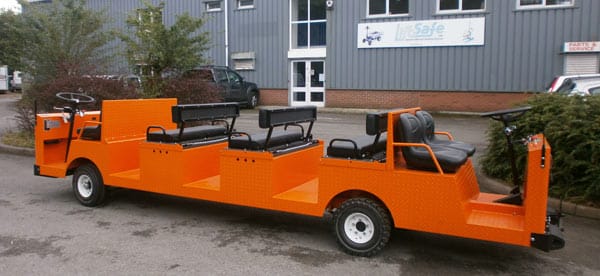
The 16 electric shuttles are specifically designed for tunnel driving. The innovative vehicles have a cab and drive train at each end, much like modern trains. This means they don’t have to turn around or be driven in reverse for the return trip. Entirely battery powered, they are clean, quiet and emit no exhaust emissions.
“The beauty of these vehicles is that they don’t have dirty, oily engines, which could pollute our pristine pipes if something went wrong,” added Paul. “They also naturally follow the safest line when used inside huge concrete pies, so there’s no danger of them trying to run up the sides like a rollercoaster.”
The Haweswater concrete pipe is just 2.6 metres in diameter. United Utilities temporarily emptied the pipeline in October 2013 so its team could safely access the site. Over a two week period, it sent around 80 engineers and surveyors into the aqueduct, which in places is hundreds of feet below ground.
Regional water supplies manager John Butcher said: “Some points in the aqueduct were nine kilometres from the nearest access point. These vehicles not only carried workers to where they were needed as quickly and effectively as possible, they also towed essential welfare equipment to keep them comfortable while they were at work.
“The whole project was a huge learning exercise for all involved and its success proves the vehicles were the right choice for us and were more than up to the job once we mastered the battery charging requirements. However we will be making some modifications to make the vehicles even more suitable for future tunnel inspections.”
Each vehicle can transport up to 8 people or more than 2,000kg of goods at speeds of up to 10mph. Easy to modify, one was kitted out as a rescue and first aid vehicle.
The inspection gave United Utilities the first detailed information on the condition of the 60-year-old concrete pipe’s full length since it was built in the 1950s.