
The EP AMP XL is one of our most adaptable and high-performance vehicles within our road legal EUV range. Its value lies not just in its base platform, which enables 400kg of carrying capabilities and 150kg of off road towing, but in how easily it can be configured to suit different operational demands. The right chassis or body modification can make all the difference in improving the usability and efficiency of your vehicle on your site.
Below are eight commonly specified customisations for the EP AMP XL, each suited to a distinct type of task or working environment, which might benefit you.
1. Caged Chassis Body for Secure Load Carrying
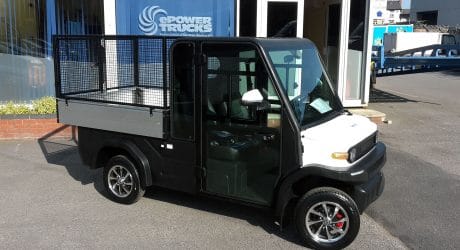
A caged chassis body adds a fixed steel or mesh enclosure around the AMP XL’s load bed, designed to contain materials that are difficult to strap or stabilise.
This is typically required when:
- Loads are loose or irregular in shape (e.g. scrap, packaging, waste etc.)
- Vehicles operate on uneven ground or stop-start routes
- There is a need to reduce reliance on manual load securing (through crude cable ties or rope)
For drivers, this means consistency and peace of mind knowing that your carried loads aren’t in danger of spilling out, leading to loss of equipment/materials. So in environments where compliance with UK load restraint guidance is a concern, a caged body provides a reliable baseline without adding procedural complexity.
2. Dropside Body for Multi-Directional Access

A dropside body features hinged side panels that fold down, allowing the load bed to be access from either side as well as the rear. This works well for:
- When multiple people are loading/unloading at the same time
- Where loads need to be accessed from different sides
- In environments where vehicles cannot always be positioned perfectly
Typical loads include tools and materials which are distributed across the bed, as well as bagged or boxed items that need partial unloading.
The dropside design makes it easier to work around the vehicle rather than from a single point. Teams can load and unload simultaneously, which helps keep jobs moving, particularly on larger sites.
It also allows drivers to access specific items without fully unloading the vehicle, which is useful when carrying mixed loads for different tasks.
3. Tipper Bed for Bulk Material Movement
A tipper bed uses a powered lifting mechanism to raise the load bed and release its contents in one controlled movement. This works well for:
- When the same material is moved repeatedly throughout the day
- Where non-solid materials are being moved like liquids or large quantities of small aggregates and materials (e.g. soil, gravel, concrete, organic material, site waste etc.)
- Where unloading needs to be quick and consistent
- In workflows with short, frequent trips between locations
Drivers can unload an entire load in seconds without manual effort, which makes a clear difference in high-frequency tasks. This keeps turnaround times consistent and allows more loads to be moved within a shift. It also simplified the unloading process, reducing variation between operators.
4. Flatbed Conversion for Long Loads

A flatbed, similar to a dropside, creates an open platform for carrying items that extend beyond typical load dimensions. They are often used:
- When carrying long or oversized items that exceed body height or width
- Where loads are irregular and difficult to position within enclosed sides
- In jobs where load types change frequently
Typical loads include pipes, timber, structural materials, fabricated parts, machinery and more.
Flatbeds give drivers the freedom to position loads without working around tall, fixed sides. This makes loading simpler for awkward items and allows better use of available space.
It’s especially useful where each job involved different materials, as the vehicle doesn’t need to be reconfigured between tasks.
5. Roller Shutter Enclosed Box for Controlled Access

A roller shutter enclosed box replaces traditional hinged doors with a vertically opening shutter. The shutter lifts upwards into a compact housing, allowing access without increasing the vehicle’s size and footprint. This works:
- When the vehicle is parked in tight spaces when swing-out doors are impractical
- In stop-start routes with frequent loading and unloading throughout the day
- Where access is needed from specific sides such as kerbside or loading bays
Typical loads include tools and equipment access repeatedly during a shift and parcels or internal deliveries with multiple drop points.
The roller shutter allows quick, controlled access without needing clearance around the vehicle. This makes a noticeable difference in confined environments or busy sites where space is limited.
It also supports a more efficient last mile delivery workflow. Drivers can open and close the compartment in seconds, access specific items without fully exposing the load area and move on without interruption.
6. Dual Cab Configuration for Crew and Equipment Transport

Combining passenger capacity with practical load space, a dual cab AMP XL configuration extends the standard cab to include a second row of seating. This can allow for an additional four to six occupants while retaining a usable rear load area. This type of setup is useful for:
- When teams need to travel together between work areas rather than using multiple vehicles
- Roles where both personnel and equipment need to be moved at the same time
- Large sites where distances make walking impractical but tasks are still localised
Typical setups include:
- Maintenance teams carrying tools alongside staff
- Grounds crews moving between zones with equipment
- Facilities teams attending jobs as a group rather than individually
A dual cab reduces the need to split teams across vehicles, which helps keep work coordinates and cuts down on unnecessary trips. Everyone arrives at the job at the same time, with the equipment they need already on board.
It also simplifies vehicle use across a shift. Rather than switching between a personnel carrier and a utility vehicle, drivers can rely on a single setup that supports both movement and work.
7. Refrigerated Body for Temperature-Sensitive Loads

A refrigerated body combines insulated panels with an electric cooling system to maintain a controlled internal temperature. Where this works:
- When goods must remain within a defined temperature range
- In short-distance, high-frequency delivery routes
- Where cold chain integrity needs to be maintained on site
Typical loads include:
- Prepared food and catering supplies
- Medical or pharmaceutical products
- Temperature-sensitive materials
Drivers can carry sensitive goods without relying on external transport or breaking temperature control between locations. This allows for more responsive, on-demand movement within a site.
It also supports compliance with standards such as HACCP, without adding complexity to daily operation.
Configuring the EP AMP XL Around Day-to-Day Work
Most configurations combine several of these features to match how the vehicle is actually used. A dropside with racking, for example, or a caged tipper for handling both containment and quick unloading. The key is understanding how materials are handled, how often the vehicle is used and how teams interact with it throughout the day.
The EP AMP XL works best when it’s configured with a clear role in mind. When the setup matches the way work is carried out, the vehicle becomes part of the process rather than just a means of transport, which helps teams move more efficiently and with less friction across the site.
If you’re interested in the EP AMP XL and how it can be configured to support your day-to-day work, get in touch with our team at ePower Trucks today.
